

Introduction
Motorcycles are popular vehicles around the world because they are efficient, compact, and easy to maneuver in traffic. Although motorcycles may appear simple compared to cars, their engines are complex mechanical systems designed to produce power efficiently.
The engine is the most important part of a motorcycle. It converts fuel into mechanical energy that moves the wheels. Understanding how a motorcycle engine works can help riders appreciate their machines better and perform proper maintenance.
Most motorcycles use internal combustion engines, which operate by burning fuel inside a chamber. This combustion process creates energy that moves the engine components and ultimately powers the motorcycle.
This article explains the basic working principle of motorcycle engines, the main components involved, and how these components work together to produce motion.
What Is a Motorcycle Engine?
A motorcycle engine is a machine that converts chemical energy from fuel into mechanical energy. This mechanical energy rotates the engine components and drives the motorcycle forward.
Most modern motorcycles use four-stroke engines, although some smaller motorcycles and older models use two-stroke engines.
Four-stroke engines are more fuel-efficient, produce fewer emissions, and provide smoother performance compared to two-stroke engines.
The Four-Stroke Engine Cycle
Motorcycle engines typically operate through a repeating process called the four-stroke cycle.
This cycle consists of four stages:
- Intake
- Compression
- Power
- Exhaust
These four stages occur rapidly while the engine is running.
Intake Stroke
During the intake stroke, the engine draws a mixture of air and fuel into the cylinder.
The intake valve opens while the piston moves downward. This downward movement creates suction, pulling the fuel-air mixture into the combustion chamber.
This mixture is essential for the combustion process.
Compression Stroke
After the air and fuel enter the cylinder, the piston moves upward and compresses the mixture.
Compression increases the pressure inside the cylinder, which allows the fuel to burn more efficiently.
During this stage, both intake and exhaust valves remain closed.
Power Stroke
The power stroke is where energy is produced.
A spark plug ignites the compressed fuel-air mixture, causing a small explosion inside the cylinder.
This explosion pushes the piston downward with great force, generating mechanical energy.
The piston’s movement turns the crankshaft, which ultimately powers the motorcycle’s wheels.
Exhaust Stroke
Once the combustion process is complete, burned gases remain inside the cylinder.
The exhaust valve opens, and the piston moves upward again to push the exhaust gases out through the exhaust system.
After this step, the engine cycle begins again.
Main Components of a Motorcycle Engine


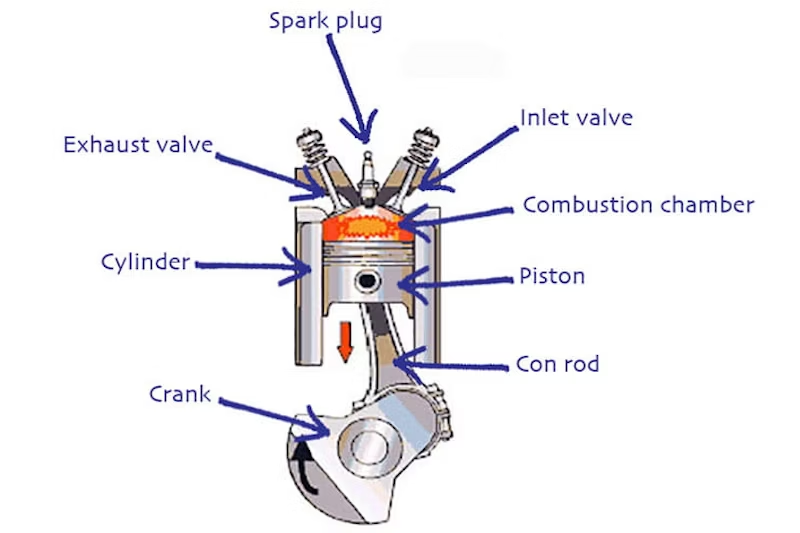
Several important components work together inside a motorcycle engine.
Cylinder
The cylinder is the chamber where the combustion process occurs. It houses the piston and provides the space needed for the fuel-air mixture to ignite.
Motorcycles may have one cylinder or multiple cylinders depending on the engine design.
Piston
The piston moves up and down inside the cylinder during the engine cycle.
Its main functions include:
- Compressing the fuel-air mixture
- Receiving force from combustion
- Transferring motion to the crankshaft
Crankshaft
The crankshaft converts the up-and-down movement of the piston into rotational motion.
This rotational motion powers the motorcycle’s drivetrain and moves the wheels.
Spark Plug
The spark plug produces the spark needed to ignite the fuel-air mixture during the power stroke.
A properly functioning spark plug is essential for efficient engine performance.
Valves
Valves regulate the flow of air, fuel, and exhaust gases in the engine.
Two main types of valves exist:
- Intake valves
- Exhaust valves
These valves open and close at precise times to ensure proper engine operation.
Types of Motorcycle Engines
Motorcycles use different engine configurations depending on the type of bike and its intended performance.
Single-Cylinder Engine
Single-cylinder engines are commonly used in smaller motorcycles.
Advantages include:
- Simpler design
- Lower cost
- Lightweight construction
However, they may produce more vibration compared to multi-cylinder engines.
Parallel Twin Engine
Parallel twin engines contain two cylinders arranged side by side.
These engines provide:
- Better power output
- Smooth performance
- Improved balance
Many modern motorcycles use this configuration.
V-Twin Engine
V-twin engines have two cylinders arranged in a V-shape.
These engines are commonly used in cruiser motorcycles.
They are known for:
- Strong torque
- Distinct engine sound
- Smooth power delivery
Inline-Four Engine
Inline-four engines contain four cylinders arranged in a straight line.
These engines are often found in high-performance motorcycles.
Advantages include:
- High power output
- Smooth engine operation
- Efficient performance at high speeds
Fuel System in Motorcycles
The fuel system delivers fuel to the engine for combustion.
Main components include:
- Fuel tank
- Fuel pump
- Fuel injectors or carburetor
- Fuel filter
Older motorcycles used carburetors to mix air and fuel. Modern motorcycles commonly use fuel injection systems, which deliver precise amounts of fuel for improved efficiency.
Cooling System
Motorcycle engines generate heat during operation.
To prevent overheating, engines use cooling systems such as:
- Air cooling
- Liquid cooling
Air-cooled engines rely on airflow around the engine to reduce heat.
Liquid-cooled engines use coolant that circulates through the engine to maintain optimal temperature.
Lubrication System
The lubrication system reduces friction between moving engine parts.
Engine oil circulates through the engine to lubricate components such as:
- Pistons
- Crankshaft
- Valves
Proper lubrication prevents excessive wear and improves engine longevity.
Regular oil changes are necessary to maintain engine performance.
How Engine Power Reaches the Wheels
The engine’s power must be transferred to the wheels to move the motorcycle.
This process involves several components.
Transmission
The transmission system allows the rider to change gears and control the engine’s power output.
Lower gears provide more torque for acceleration, while higher gears allow higher speeds.
Chain or Belt Drive
Motorcycles transfer power from the engine to the rear wheel using:
- Chains
- Belts
- Shaft drives
Chains are the most common method and are known for durability and efficiency.
Rear Wheel
Once power reaches the rear wheel, the wheel rotates and moves the motorcycle forward.
This rotation allows the motorcycle to travel at different speeds depending on throttle input and gear selection.
Importance of Motorcycle Engine Maintenance
Regular maintenance is essential for keeping a motorcycle engine in good condition.
Important maintenance tasks include:
- Changing engine oil regularly
- Cleaning or replacing air filters
- Inspecting spark plugs
- Checking coolant levels
- Maintaining the chain drive
Proper maintenance improves fuel efficiency and extends engine life.
Common Motorcycle Engine Problems
Some common engine problems include:
- Difficulty starting the motorcycle
- Loss of power
- Excessive engine noise
- Overheating
- Poor fuel efficiency
These issues may result from worn components, improper maintenance, or fuel system problems.
Early diagnosis and repair can prevent serious damage.
Conclusion
A motorcycle engine is a sophisticated mechanical system that converts fuel into motion through the internal combustion process. The four-stroke cycle—intake, compression, power, and exhaust—allows the engine to generate the energy needed to move the motorcycle.
Components such as pistons, cylinders, spark plugs, valves, and crankshafts work together to perform this process efficiently. Supporting systems like fuel delivery, cooling, and lubrication ensure the engine operates safely and reliably.
Understanding how a motorcycle engine works helps riders maintain their motorcycles properly and appreciate the engineering behind these powerful machines. With regular maintenance and proper care, motorcycle engines can provide reliable performance for many years.